Role-Play: The Skill That Separates Good Agents from Great Ones
Jul 13, 2026Think about the last time you stumbled over a fee objection, hesitated during a price-alignment conversation, or fumbled the closing question at a listing presentation. It didn't feel great, did it? But more importantly, what did that moment actually cost you?
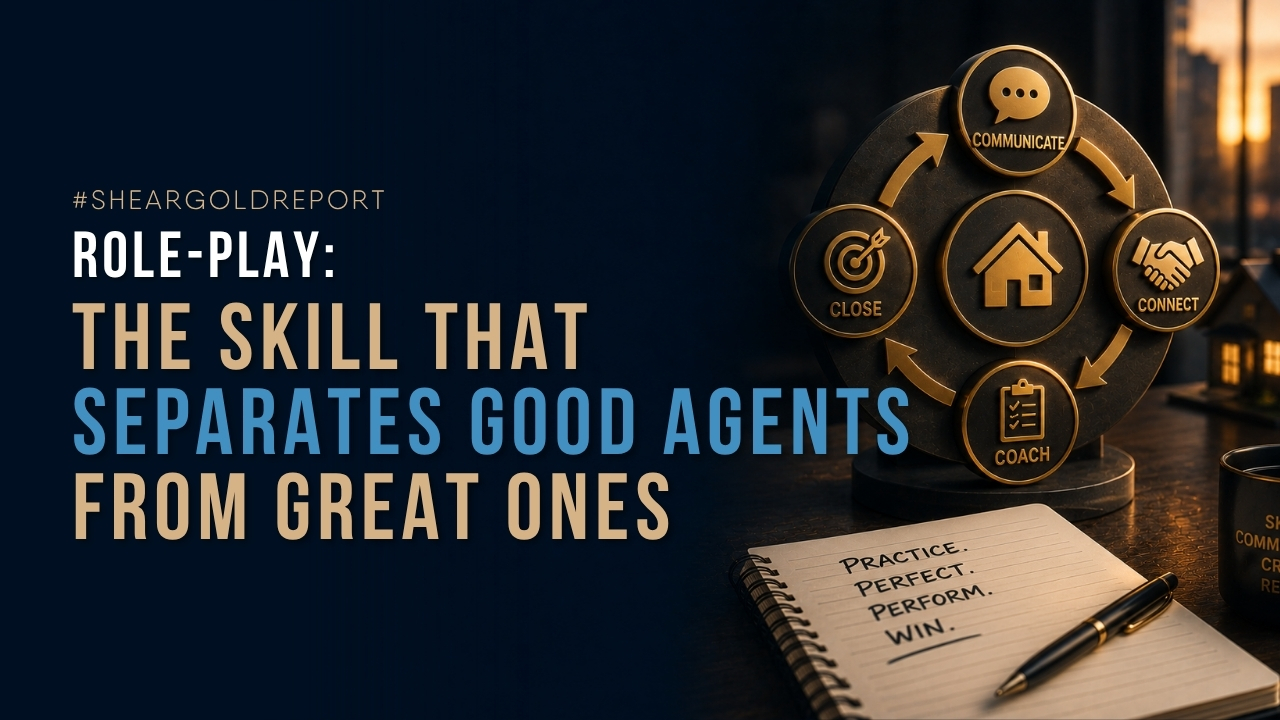
In high-performance real estate, the truth is clear: if you are figuring out what to say while standing in front of a prospective seller, you are practising on your clients. And in today's market, practising on clients is simply too expensive.
Elite performance is never accidental. The best agents in the country don’t step into a lounge room and wing it; they rely on deep, internalised muscle memory. To get to that level, we need to transform how we view, value, and execute the art of the role-play.
The Financial Reality of 'Live' Practice
When a professional athlete steps onto the field, they have already run their plays thousands of times in training. Yet, in real estate, many agents treat live client interactions as their primary training ground.
Consider the math:
- A dropped listing due to clunky dialogue isn't just a missed opportunity; it’s tens of thousands of dollars in lost commission, future referrals, and market momentum.
- The training room is free; the real world is incredibly penalising.
By building a culture of consistent internal practice, you ensure that when the pressure is on, your dialogue flows naturally, authentically, and effectively.
It’s Role-Play, Not Role-Serious!
Here is where many leaders and teams get it wrong: they make practice sessions feel like a trip to the dentist. They treat it with a level of stiffness that causes agents to freeze up, dread the session, and ultimately check out.
Let’s clear something up once and for all: it is called role-play, NOT role-serious!
If your training sessions feel like a high-stakes interrogation, you are doing it wrong. Role-play should be high-energy, engaging, and collaborative. It’s about creating a safe space to fail, experiment, and laugh off the mistakes so that when you are in front of a client, you are completely flawless. Inject some humour, keep the energy high, and remember that the goal is progress, not perfection.
Moving from Scripted to Instinctual
The ultimate goal of great dialogue is not to sound like a rehearsed robot. It is to build muscle memory so that your responses become automatic, allowing you to focus entirely on the client's body language and emotions.
When dialogue moves into muscle memory, you stop thinking about what to say next and start focusing on how the client is feeling. You transition from a salesperson delivering a pitch to a trusted adviser guiding a conversation.
The Playbook for Winning Practice Sessions
To turn your team's role-play from a chore into a competitive advantage, implement these four rules:
- Frequency Beats Duration: Ten minutes of sharp, daily dialogue practice at the start of the morning meeting is infinitely more effective than a grueling two-hour session once a month. Keep it punchy.
- Focus on the Triggers: Don't try to role-play an entire two-hour listing presentation. Isolate the critical pivot points—handling the commission objection, asking for the business, or introducing a VPA strategy.
- Tag-Team the Scenarios: Keep it dynamic. Have one agent start the dialogue, and then have the leader call "Freeze!" and pass the conversation to another agent to pick up where they left off. It keeps everyone on their toes and listening intently.
- Celebrate the Wins: End every session on a high note. Highlight a brilliant turn of phrase or a great recovery. Positive reinforcement builds the confidence needed to deploy these skills in the field.
The Bottom Line
The market will always reward the most skilled communicators. Stop leaving your income to chance and stop using your pipeline as a testing lab.
Commit to the daily discipline of role-play. Make it fun, make it consistent, and build the muscle memory that ensures you role-play to win.